New Build vs Old Stone House in Dalmatia: Which Fits You Better?
Two very different dreams share the same coastline: the clean, ready-to-use modern home, and the old stone house with a story in every wall. This is an honest comparison to help you tell which one fits your life — not which one is “better,” because neither is.
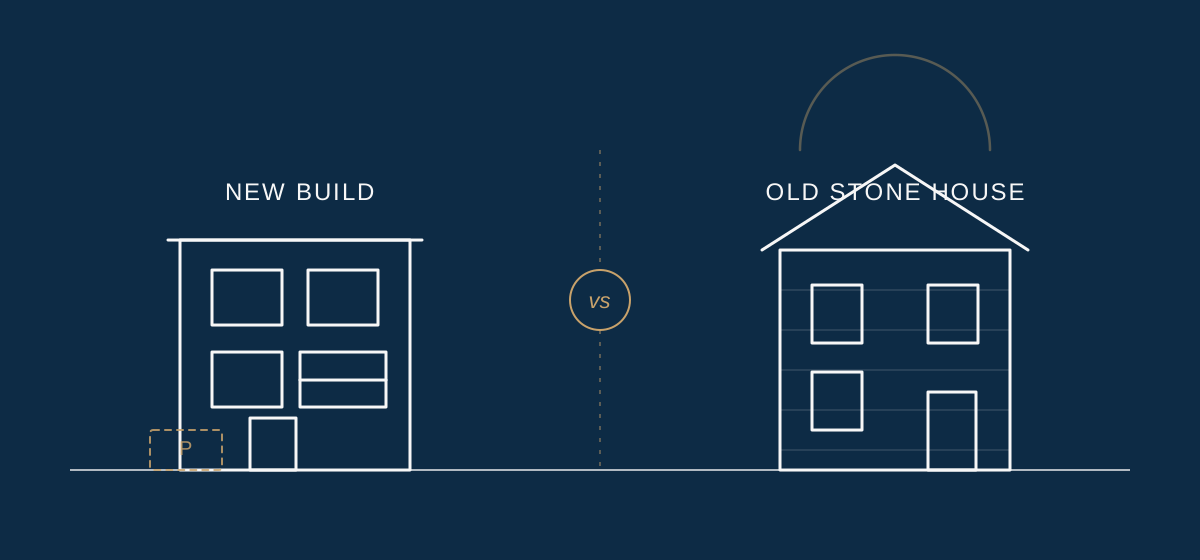
Character and location
Older stone houses are often found in established village centres, historic areas or older residential streets, while newer developments may be located in newer residential areas, on hillsides or at the edges of settlements. Neither location is better; they're simply different starting points. Where you want to be day to day is worth deciding before the building type — our best areas guide and the Trogir vs Čiovo vs Seget comparison can help.
Layout, light, stairs and everyday comfort
Newer homes
Many newer homes are designed around contemporary living — more open layouts, larger windows, and often a lift in apartment buildings. That can make everyday comfort more predictable from day one.
Old stone houses
Older houses can be more vertical, with steeper stairs, smaller window openings and, in some cases, lower ceilings — characterful, but worth picturing for how you'd actually live in them. Whether the layout can be changed is a question for professionals, and may depend on the building's status (see below).
Parking, access and outdoor space
Access and parking often differ by setting rather than by age. Newer developments may be more likely to include a designated parking space, but this should always be confirmed for the specific property. Old-town stone houses are frequently in pedestrian zones where you park outside the core and walk. Outdoor space varies both ways — a stone house might come with a courtyard or garden, a newer home with a balcony, terrace or shared pool. There's more on parking in the area comparison.
Maintenance and unknowns
This is where the honest difference often lies. A newer property may come with fewer immediate unknowns, but it still deserves careful legal and technical checks. An older stone house can hold more surprises behind its charm — in condition and in paperwork — which is exactly why due diligence matters more, not less. Our guide to renovating a stone house walks through what to inspect; none of it means a stone house is a problem, only that it asks more questions before you commit. Weighing an apartment specifically? See Buying an Apartment in Trogir.
Utilities, insulation and modern living
Newer homes are more likely to come with modern wiring, plumbing, insulation and heating or cooling as standard. Older houses may have some of these updated and some not — assume nothing from a listing, and verify on site. Improving insulation or ventilation in a thick-walled stone house can be worthwhile but is a specialist task, particularly where the building is protected.
Renovation freedom versus protected or older buildings
A common assumption is that you can do as you like with an older house and nothing with a new one — the reality is more nuanced. Changes to any property may require approval. Some older buildings may sit within protected zones. Confirm what applies to the specific property with the competent conservation authority and your lawyer. Newer homes carry their own paperwork too, including the developer's permits and documentation, which a lawyer should review.
What professionals should check before purchase
Whichever way you lean, some things are for professionals, not a viewing. Consider, as appropriate to the property:
- A lawyer's review of ownership, permits, and — for older or protected buildings — legal and conservation status; and for newer homes, the developer's permits and documentation. Some older properties may also have been regularised under Croatia's legalisation process; where applicable, ask for the relevant decision and have a lawyer review it.
- An independent technical inspection of structure, roof, moisture and installations.
- Input from local builders, an architect or an engineer on anything you'd want to change.
Our pre-purchase checklist sets out how these fit together. Our Property Services directory is in development; local providers may be listed there in future, and no provider is currently endorsed, verified or recommended by Trogir Property Guide. You can follow it on the Property Services page.
Which may suit you?
A newer home may suit you if you want to use the home sooner with fewer immediate unknowns, value modern layout, insulation and utilities from day one, would like a designated parking space, or prefer not to manage a project — especially from abroad. If that sounds like you, our sea-view apartments guide is a natural next read.
An old stone house may suit you if you're drawn to character, history and an established setting, you're prepared to work with professionals over time, and you see care and renovation as part of the appeal rather than an obstacle. The renovation guide is the place to go deeper.
Many buyers sit between the two — and that's fine. The point isn't to pick a side; it's to know which trade-offs you're happy to live with.
A calm conclusion: neither is objectively better
New or old is one of those choices that has no correct answer, only a right answer for you. One can offer predictability and modern comfort; the other offers character and a connection to place. Both can be wonderful homes, and both reward the same thing: seeing with your heart, then checking with professionals. Decide which trade-offs suit your life, verify the specifics of the actual property, and you'll choose well either way. When you're ready to look, browse the property section or start from the guides hub.
Official resources and last updated
General information, not legal, tax or technical advice. For anything touching heritage, permits or planning, start with the official sources and confirm the specifics with the competent authority and your own professionals:
- gov.hr — renovating a protected house (cultural heritage)
- Ministry of Culture and Media — conservation departments (including Trogir)
- mpgi.gov.hr — building and use permits, and legalisation
- ISPU — spatial-planning information system
- For costs, taxes and ownership rules, see the official sources in our buying guide.
These links are provided for orientation only and do not extend the information in this article. Last updated: 7 July 2026.
Read the two deeper guides
Go deeper on each option — renovating a stone house and finding a sea-view apartment — then browse the property section.
Browse properties