Sea-View Apartments Around Trogir: Where to Find Them & What to Check
“Sea view” is one of the two most powerful phrases in a Croatian property listing — and one of the most elastic. This guide is about telling a real one from a hopeful one, before the view decides your purchase.
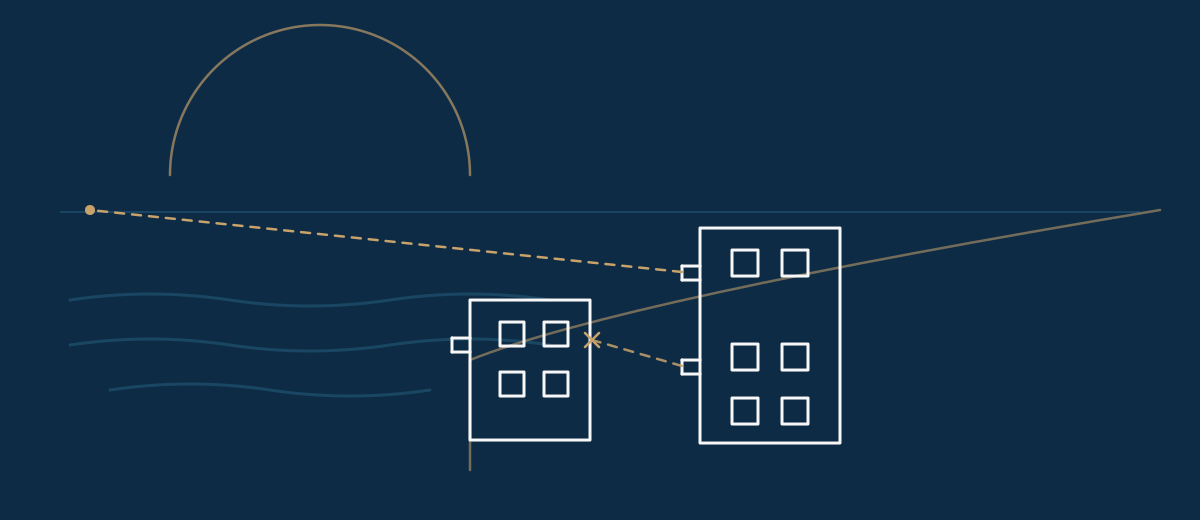
A full panorama over the open Adriatic and a sliver of blue between two roofs are both, technically, a sea view. Learning to tell them apart — and knowing what could change the view after you buy — is most of what this guide is for.
What “sea view” actually means
The phrase covers everything from a wraparound terrace above the water to a narrow diagonal glimpse you have to lean for. In listings you'll also see the Croatian pogled na more — literally “view of the sea.” Neither the English nor the Croatian is standardised, so treat “sea view” as an invitation to look, never as a specification. The rest of this guide is how you look.
Why two sea-view apartments can be completely different
Four things shape a view far more than the listing photo — which was taken on the clearest morning of the year, from the best corner of the balcony:
- Location & distance to the sea. A view from higher up a slope can be wider and more reliable than one at the water's edge that's boxed in by neighbours. “Near the sea” and “sees the sea” are different promises — and neither guarantees an easy walk down to swim.
- Floor & height. On a slope, one floor up or down can change everything. Lower floors often lose the view to the building or wall in front; upper floors clear it.
- Orientation. Which way the view faces shapes the light and the feel — morning sun, flat midday glare, or long golden evenings — and whether you're looking at open water or across a bay. It varies from one spot to the next, so judge it on site.
- What's in front today — and what could be built there tomorrow. The single biggest risk to a view is the open plot below it. That deserves its own section, further down.
Where sea-view apartments are found around Trogir
A general orientation, not a listing map — for the character of each area, see our area guides and the honest Trogir vs Čiovo vs Seget comparison. Many sea-view apartments are newer builds; if you're also weighing an older stone house, see new build vs old stone house.
- Čiovo is where most newer sea-view apartments are concentrated. Okrug Gornji tends to face the more open water and is the choice for buyers who want the open sea, beach proximity and a livelier summer atmosphere. The northern side of the island — Slatine, Arbanija and Mastrinka — is generally quieter and tends to look across the bay toward the mainland. Exact orientations depend on the individual location. See also Property on Čiovo for the villages themselves.
- Seget, especially the slopes of Seget Gornji, can offer wide views over the bay and toward the sea, depending on where exactly the property sits. See also Property in Seget.
- Mainland Trogir has fewer classic panorama sea-view apartments than Čiovo or Seget Gornji; here it's more often about water proximity, a channel view, or being close to the old town.
Check the view itself
The listing sold you a photograph. On site, verify the reality:
- Stand on the actual balcony, not in the doorway. Note where the view starts and ends, and from which rooms you can really see it — a “sea-view apartment” is sometimes a sea-view corner of one room.
- Look down before you look out. What sits between you and the water — rooftops, wires, a car park, a wall?
- Go at a different time of day if you can. Morning light and afternoon glare are, in effect, two different apartments.
The open-plot problem: future construction
That open green space holding your view belongs to someone, and whether it stays open is a matter of local planning, not goodwill.
- On the viewing, identify every undeveloped plot between the apartment and the sea — and below it on the slope.
- Whether something can be built there, and how tall, is governed by the local spatial plan. Use official planning information as an initial check, then ask the relevant municipality and your lawyer to confirm what applies to the specific property.
Our pre-purchase checklist sets out how this fits into wider due diligence. A view you can't confirm is a view you're holding on trust.
Access, parking and the slope
Sea-view apartments are often on hillsides — which is exactly why they see the sea. That has practical consequences worth checking:
- Access road. Is the road up finished, maintained and passable year-round, and who is responsible for it? Steep, narrow or unmade approaches matter in winter and at resale.
- Parking. Is a space actually attached to the property, and where is it relative to the front door — level, or a climb? There's more on parking in the area comparison.
- The stairs question. On a slope, “first floor” can mean a flight up from the street or a flight down to it. Walk it.
Summer atmosphere, wind and the seasons
The view is year-round; the conditions around it are not.
- Summer atmosphere. Beach and promenade locations such as Okrug Gornji Beach (known locally as Copacabana) are livelier in high summer than in the quieter months. If a spot's summer energy matters to you either way, try to judge it in season.
- Wind & exposure. An exposed sea-facing position gets the weather as well as the view. Locally, the bura and jugo winds come from different directions, and how much a specific balcony is affected depends heavily on its micro-location — worth understanding for terrace use, shade, outdoor furniture and comfort across the year.
- Winter reality. Picture — or better, visit — the same balcony in February. A viewing trip in the quieter months tells you the most; see Plan Your Viewing Trip.
Questions worth asking on every sea-view viewing
- From which rooms, and how much of the view, is actually sea?
- What is on the plots between here and the water — and could they be built on?
- Which way does the balcony face, and what is the light like in the afternoon?
- Is parking attached, and how is the access road maintained?
- How does this spot feel at peak season, and in winter?
Official resources and last updated
General information, not legal advice. For anything touching future construction or planning around a property, start with the official source and confirm with the relevant municipality and your lawyer:
- ISPU — Croatia's spatial-planning information system
- For costs, taxes and ownership rules, see the official sources listed in our buying guide.
These links are provided for orientation only. Last updated: 7 July 2026.
The balcony tells you more than any listing
Browse the property section and plan a viewing trip — then stand on the terrace and look down before you look out.
View properties in Trogir