Property in Trogir: Where to Start
Most property searches here begin with three words — “property in Trogir” — and quickly meet a surprise: Trogir is not one market but a small historic town surrounded by very different neighbours. This guide is the orientation we wish every buyer had before the first browsing session: what the name actually covers, what you'll find there, and how to narrow it down calmly.
Why Trogir is a useful starting point
Trogir earns its place at the centre of a search for practical reasons as well as romantic ones. It is a real town that functions year-round: schools, a market, a health centre, banks and everyday services, wrapped around a UNESCO-listed old town that has been continuously lived in for over two thousand years. Split Airport is about 6 km away — closer to Trogir than to Split itself — which makes this one of the most accessible stretches of the Croatian coast for owners who fly in regularly.
Just as important: Trogir sits in the middle of several very different ways of living. Within a ten-to-twenty-minute drive you move from historic stone lanes to island beaches to quiet village waterfronts. That density of contrast is what makes “start in Trogir” good advice even for buyers who end up purchasing somewhere nearby instead.
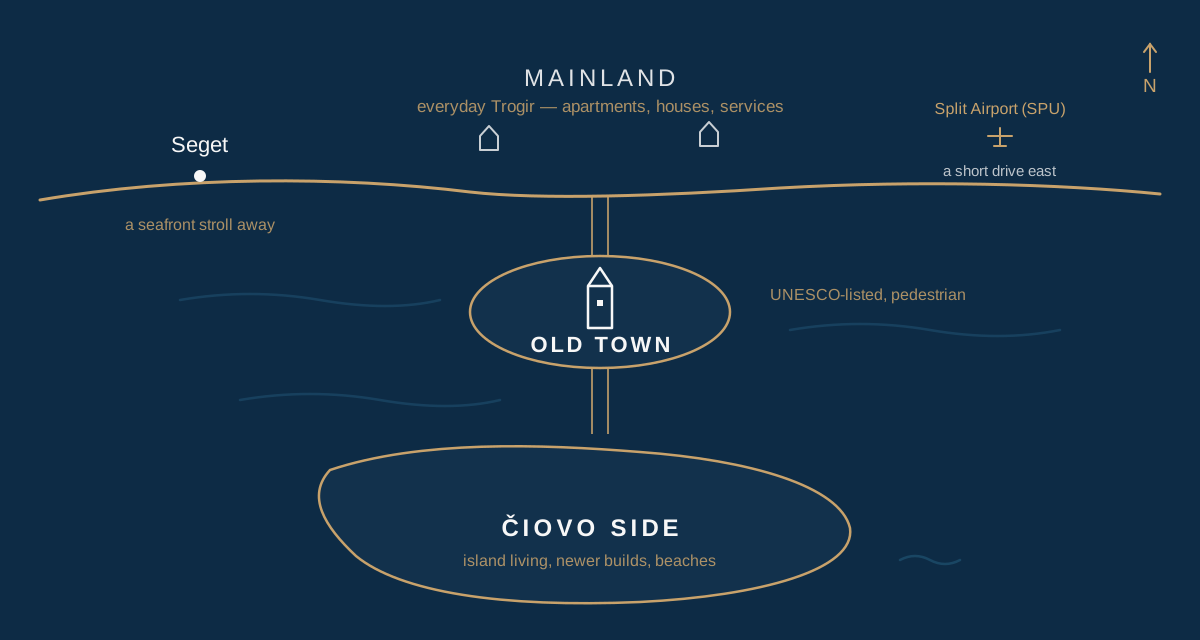
What “property in Trogir” actually means
Listings labelled “Trogir” can sit in genuinely different settings. Before comparing properties, it helps to know which of these you are actually looking at.
The old town (historic core)
A tiny island of stone between the mainland and Čiovo, pedestrian throughout, and protected as a UNESCO World Heritage site. Properties here are historic stone houses and apartments — unmatched in character, and with questions to match: renovation state, access on foot, and where owners actually park. If this is your dream, read our guides to renovating a stone house and what to check before buying early, not late.
Mainland Trogir
Where everyday Trogir lives: conventional apartments and family houses in residential districts, a short walk or drive from the historic centre. Less postcard, more practicality — normal streets, normal parking, services around the corner. For many buyers who want the town without the old-town constraints, this is the natural compromise.
The Čiovo side
Cross one of the two bridges and you are on the island of Čiovo, whose nearest districts function almost as Trogir suburbs while the further villages — Okrug Gornji, Slatine — have their own distinct feel. Much of the area's newer, holiday-oriented development is here. Čiovo deserves its own decision, which is exactly what our Trogir vs Čiovo vs Seget comparison is for. For the village-by-village picture, see Property on Čiovo.
Seget, next door
West of Trogir, the villages of Seget begin where the town ends — Seget Donji's old walled core is a seafront stroll from Trogir's gates. Quieter, more local, and often overlooked in a “Trogir” search even though it shares most of the location's advantages. For the village-by-village picture, see Property in Seget.
The property types you'll meet — and what each implies
No prices here, deliberately — those belong to a conversation about a specific property. What matters at this stage is what each type asks of you.
Apartments
From old-town conversions to conventional residential buildings on the mainland. The everyday questions: floor and stairs, orientation, building maintenance and running costs. If the view matters, start with our sea-view apartments guide. For apartments specifically, see Buying an Apartment in Trogir.
Stone houses
The region's signature. Character on the surface, questions in the roof, walls and paperwork — our stone house guide walks through what to look at before you commit.
Sea-view homes
“Sea view” is one of the most elastic phrases in Croatian listings; where the view comes from matters as much as whether it exists. The sea-view guide shows how to tell a real one from a hopeful one.
Newer developments
Mostly on Čiovo and at the edges of settlements: modern layouts, parking, more predictable condition — with their own paperwork for a lawyer to review. Weighing old against new? See new build vs old stone house.
Renovation projects
Deeply rewarding for the right buyer, and not for everyone; the honest question is how you want to spend your time, not just your budget. The renovation guide helps you decide which buyer you are.
What to think about before choosing an area
Six practical questions decide how a place feels day to day. None of them has a right answer — the point is to know your answers before viewing anything specific.
- Access and parking. The single most underestimated factor. The old town is pedestrian; mainland and village streets vary house by house. Make every listing answer “where would I actually park?” — in August.
- Distance to the old town. Decide honestly how often you'll want to be there. A five-minute walk and a fifteen-minute drive are different lives — both can be right.
- Summer vs winter feeling. The same street can be a promenade in July and silent in February. Trogir keeps the most year-round life; holiday-oriented areas quieten down. Visit out of season if you can.
- Airport access. One of the region's genuine practical advantages — worth weighing if you'll fly in often. Our viewing trip guide covers getting here and around.
- Beach proximity. Be precise about what you want: a view of water, a place to swim daily, or a beach scene — they point to different areas.
- Stairs, slopes and everyday practicality. Old-town houses are vertical; hillside homes trade steps for views. Think about luggage, groceries and knees — the unromantic things you'll do weekly.
How to use the guides from here
-
Compare the three core areas
Trogir vs Čiovo vs Seget — the honest comparison of daily life, parking, beaches and winter.
-
Understand the buying process
Buying Property in Croatia — process, costs and ownership rules, with official sources.
-
Know your property type
Sea-View Apartments or New Build vs Old Stone House, depending on where the section above pointed you.
-
Prepare the checks
What to Check Before Buying — the 12-point due-diligence checklist.
-
Plan the trip
Plan Your Viewing Trip — when to come, how to schedule viewings, what to bring.
A calm way to start
Choose the area first, and choose it with your eyes open — walk it at different times of day, in more than one season if you can. Then, and only then, fall for a specific property, and check it as carefully as our checklist suggests. Buyers who work in that order tend to decide well; buyers who start from a photograph tend to buy the photograph.
When you're ready to see what homes here look like, browse the property section — we add entries one at a time and check each before it appears.
How to use it
This is general orientation based on local knowledge and regular time spent in the area — not legal, tax or investment advice, and not a ranking or a recommendation to buy. Areas change, and every street is different, so treat it as a starting point for your own visits rather than a verdict. For travel details, see Split Airport — to & from the airport; for costs, taxes and ownership rules, the official Croatian sources listed in our buying guide.
Last updated: 9 July 2026.
See what a shortlist looks like
Browse the property section for Trogir, Čiovo and Seget — every entry is checked before it appears.
View properties in Trogir