Buying an Apartment in Trogir
This guide is for buyers considering an apartment in Trogir and the surrounding area. Apartments here range from a floor of a centuries-old stone house to a modern flat with a sea-view balcony — and the practical questions change a great deal from one to the next. It's a calm orientation to the types, the location trade-offs and the checks that are specific to buying a flat.
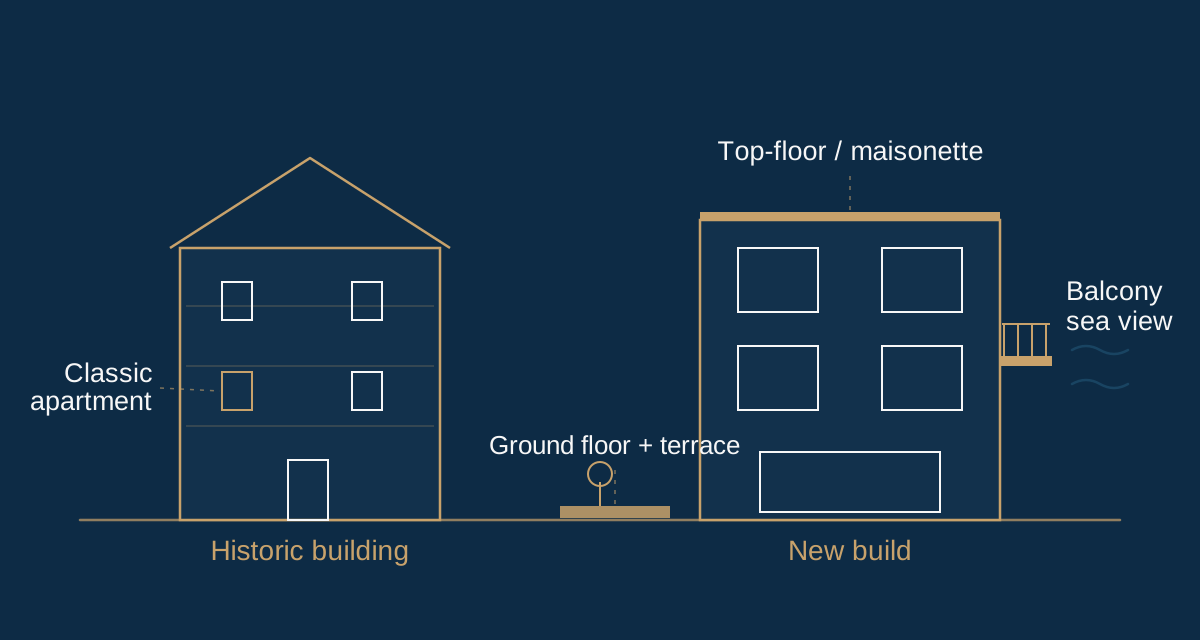
What a “Trogir” apartment listing can actually mean
Before comparing flats, it helps to know where a “Trogir” listing really sits — the setting shapes almost everything below:
- The old town. Apartments inside the UNESCO-listed historic core — often a floor of a stone house, reached through pedestrian lanes.
- Mainland Trogir. Conventional apartments in residential buildings just outside the old town, where everyday Trogir lives.
- The immediate Čiovo side. Flats across the bridge whose nearest districts function almost as an extension of the town.
- The wider area. Listings sometimes labelled “Trogir” that are really in Seget or further along the coast.
For the area picture in full, see Property in Trogir; for the neighbours, Property on Čiovo and Property in Seget, or the honest Trogir vs Čiovo vs Seget comparison.
Typical apartment types
No prices here, deliberately — those belong to a conversation about a specific property. What matters at this stage is what each type asks of you.
Apartment in a historic building
A floor of an old stone house, often in or near the old town: character and location, with questions about stairs, condition and shared parts. See new build vs old stone house.
Classic apartment in a residential building
The everyday flat in a conventional block, usually on the mainland. Predictable layouts; the questions are floor, running costs and the building around it.
New-build apartment
Modern layouts and more predictable condition, often with a parking space — and their own developer paperwork for a lawyer to review.
Ground-floor apartment with terrace or garden
Outdoor space at your door and no stairs — worth checking for damp, privacy and whether the terrace or garden is part of the property and permitted.
Top-floor or maisonette apartment
Light, views and often a roof terrace, over two levels for a maisonette — weigh the stairs, the roof condition above you and summer heat.
Sea-view apartment
“Sea view” is one of the most elastic phrases in a listing; floor, orientation and the plot in front matter more than the photo. Start with our sea-view apartments guide.
Practical differences by location
The same type of apartment behaves differently depending on where it sits. Weigh these on the ground, not from the listing:
- Access and parking. The old town is pedestrian; elsewhere it varies building by building. Ask where you'd actually park, and whether a space belongs to the flat.
- Stairs or a lift. Historic and older buildings often have no lift; on upper floors that shapes daily life and resale.
- Everyday life outside the summer season. A lively lane in August can be silent in February — visit out of season if you can.
- Noise and holiday use nearby. A building or street with many short-stay guests feels different from a year-round one; ask what the neighbours are.
- Slope, sunlight and reach. On hillsides, a floor up or down changes light and the climb; check orientation and the walk to the door.
- Old-town proximity versus beach proximity. Be precise about which you want — they point to different buildings.
Checks specific to buying an apartment
Our 12-point checklist covers the wider due diligence that applies to any property. Buying a flat adds a layer of its own — raise these as questions with your lawyer and, where relevant, the building's manager. This is general information, not legal advice.
- Is the apartment registered as its own unit? Ownership of an individual flat is established in the land register; ask your lawyer to confirm the unit is clearly identified and registered (in Croatia the registration of a flat as a separate unit is known as etažiranje) and that it matches what you're buying.
- What is common property, and what is yours? Stairwell, roof, façade, entrance and often the land are usually shared. Ask which parts are common property and how decisions and costs about them are made.
- Condition of the building, roof and stairwell — not only the flat. A tired roof or stairwell becomes a shared cost. Look beyond the freshly painted apartment.
- Is there a building reserve fund? Many buildings collect a monthly contribution to a shared maintenance and repair fund for the common parts (in Croatia this is the pričuva). Ask whether one exists, what the contribution is, and whether major works are planned.
- Is a parking space actually secured? Confirm whether a space belongs to the apartment and is documented, rather than simply used by habit.
- Are the terrace, balcony, any extension and storage room permitted? Ask for the paperwork; an undocumented addition is a question for your lawyer, not something to take on trust.
- Separate utility meters. Confirm the flat has its own water and electricity metering, and how any shared building costs are divided.
- Damp, ventilation and summer overheating. Look low for rising damp and up for ceiling stains; ask about ventilation and how the flat copes with summer heat given its orientation and floor.
- Use permit and documents. Whether the building may be used as built (the uporabna dozvola) and that the documents are in order is worth confirming, especially for older or altered buildings — a document question for your lawyer.
Points about registration, common property, permits and the use permit are for an independent lawyer; the official Croatian sources are listed in our buying guide.
How to use the guides from here
-
Get your bearings
Property in Trogir and the Trogir vs Čiovo vs Seget comparison — where to look, and how the areas differ.
-
Know your apartment type
Sea-View Apartments for the view question, or New Build vs Old Stone House for new against old.
-
Prepare the checks
What to Check Before Buying — the 12-point due-diligence checklist that sits under the apartment-specific one above.
-
Understand the process
Buying Property in Croatia — the purchase process, costs and ownership rules, with official sources.
Choose the setting, then check the flat
An apartment is really two decisions: the setting — old town, mainland, the Čiovo side or the wider area — and the specific flat and the building around it. Choose the setting with your eyes open, then check the apartment as carefully as the questions above suggest, with your own lawyer on the points that need one.
When you're ready to see what homes here look like, browse the property section — we add entries one at a time and check each before it appears — or start from the guides hub.
How to use it
This is general orientation based on local knowledge and regular time spent in the area — not legal, tax or investment advice, and not a ranking or a recommendation to buy. Buildings and rules differ, and every flat is different, so treat it as a starting point for your own visits and professional checks rather than a verdict. For costs, taxes, ownership rules and the official Croatian sources, see our buying guide.
Last updated: 16 July 2026.
See what a shortlist looks like
Browse the property section for Trogir, Čiovo and Seget — every entry is checked before it appears.
View apartments in Trogir